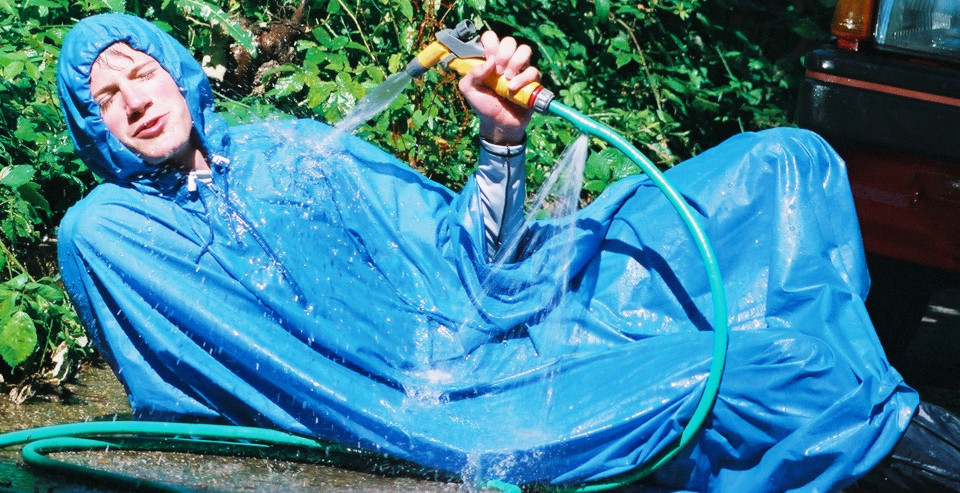
Outdoor Adventure Kit Tests
by Pierre, Adventure Kit Reviewer
I'm a keen swimmer and adventurer, so the editorial team usually ask me to do many of the clothing tests, which often involve repeated soakings over a length of time.
It is important you test your adventure kit before you head out to see if it works as expected. On this page you'll find a few ways you can test your own kit. Wear some thin cotton clothes underneath to detect leaks more easily as dark spots.
Before I did my first real test, they played a funny wet prank on me.
Most new interns endure and enjoy these pranks when they join.
I found it to be a nice fun surprise
because I enjoy a good soaking anytime.
Cycling Cape Prank
When I first started reviews for this website, the team asked me to test a hiking cape for cycling, wearing dry clothes underneath. I'm keen on cycling in the rain, but hiking capes are not usually worn for cycling, so this was interesting. The sprinkler simulated consistent rainfall. I kept the hood down because the weather was hot, even though I knew a little water may leak in.
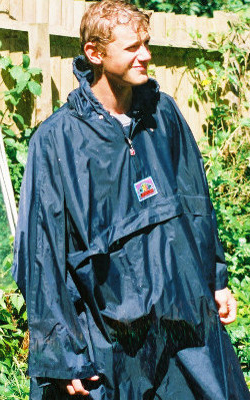
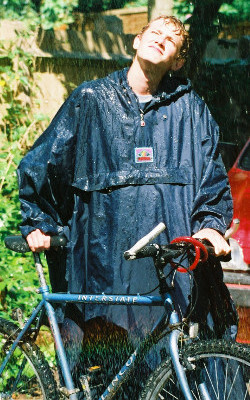
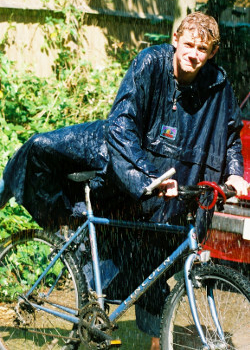
I got on the bike while the sprinkler soaked the cape on the outside.
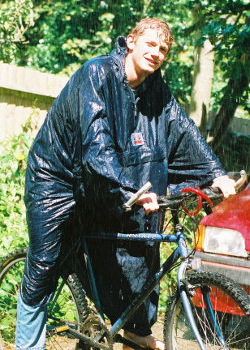
The cape was not waterproof. I got quickly soaked to the skin.

My clothes were dripping wet from that prank. Haha, very funny.

Finally they hosed me down and welcomed me to the team.
Hiking Rain Cape
Rain capes and ponchos are essential for many wet adventure sports. They keep you warm, but not always dry. Our team asked me to find out how wet one can get in a hiking cape. This one was lightweight, very large, with good cover. I wore it over rain pants and a swim shirt, a light and comfy outfit I wear a lot, even indoors or for swimming.
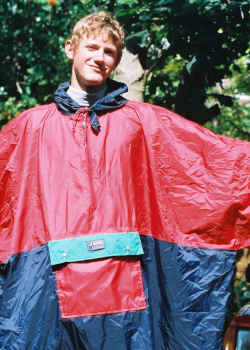
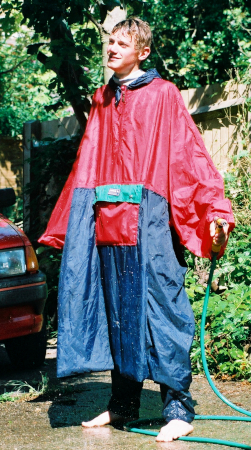
Here I am still dry and cosy. Hiking capes are very roomy for better ventilation.
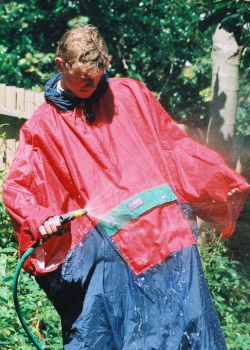
Started spraying from the bottom, like when hiking through wet vegetation (Hiker Wash). Still dry except for my feet.
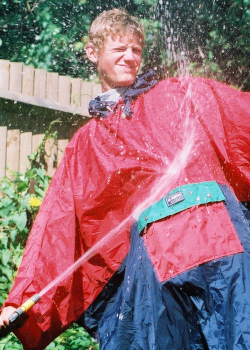
Moving up to the top, like when rain or spray hits you. Here most kit starts to leak and you get wet. I was still mostly dry.
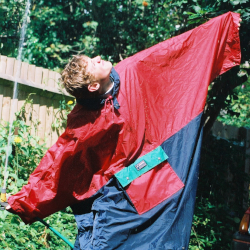
Simulating rainfall with the hose pipe was fun. You can see how large this cape is.
Because I had the hood down, water came in and my clothes inside got a bit wet.
This was to be expected as the rain runs off your head and right into your collar.
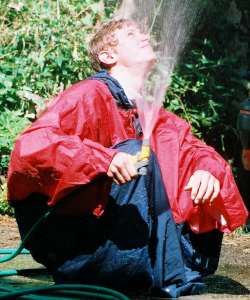
Sitting down in the rain was so relaxing. The drops hit the wet nylon cape and ran off.
After half an hour I was soaked through to the skin from sweat and water, but this hiking cape felt very cosy.
Hiking Cape Hood
In the previous test I got soaked through the neck opening, because I had the hood down. Now let's see what happens when the hood is up. I wore full set of dry clothes underneath. Two team members sprayed me with hosepipes.
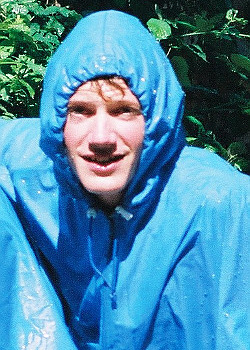
The hood fits well and feels good. I'm still dry inside.
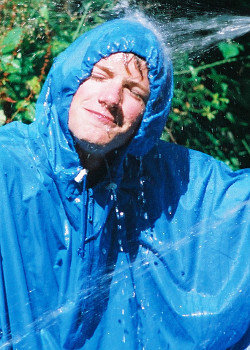
Water from above. Not much comes into the face opening.
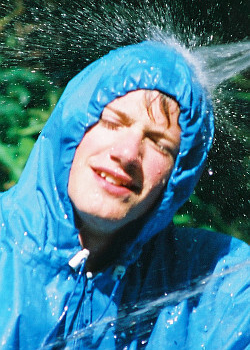
The hood holds up well. A bit more water comes in over time.
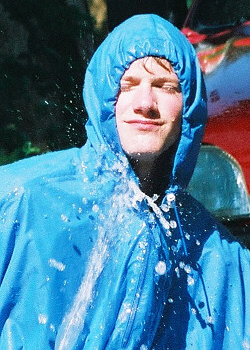
Water spray from below comes in through the collar and soaks my dry clothes a little bit.
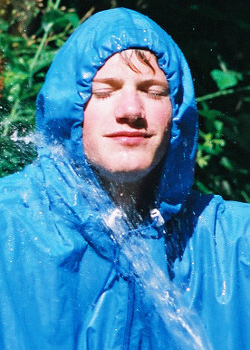
As more water flushes into the collar, my clothes get wet, but the cape keeps me warm and happy.
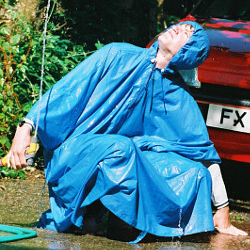
Summary: The hood kept me dryer. Some water came in via the face opening, but not as much than with the hood down.
Get used to wearing a hood. You'll get wet slowly, mostly from sweat.